
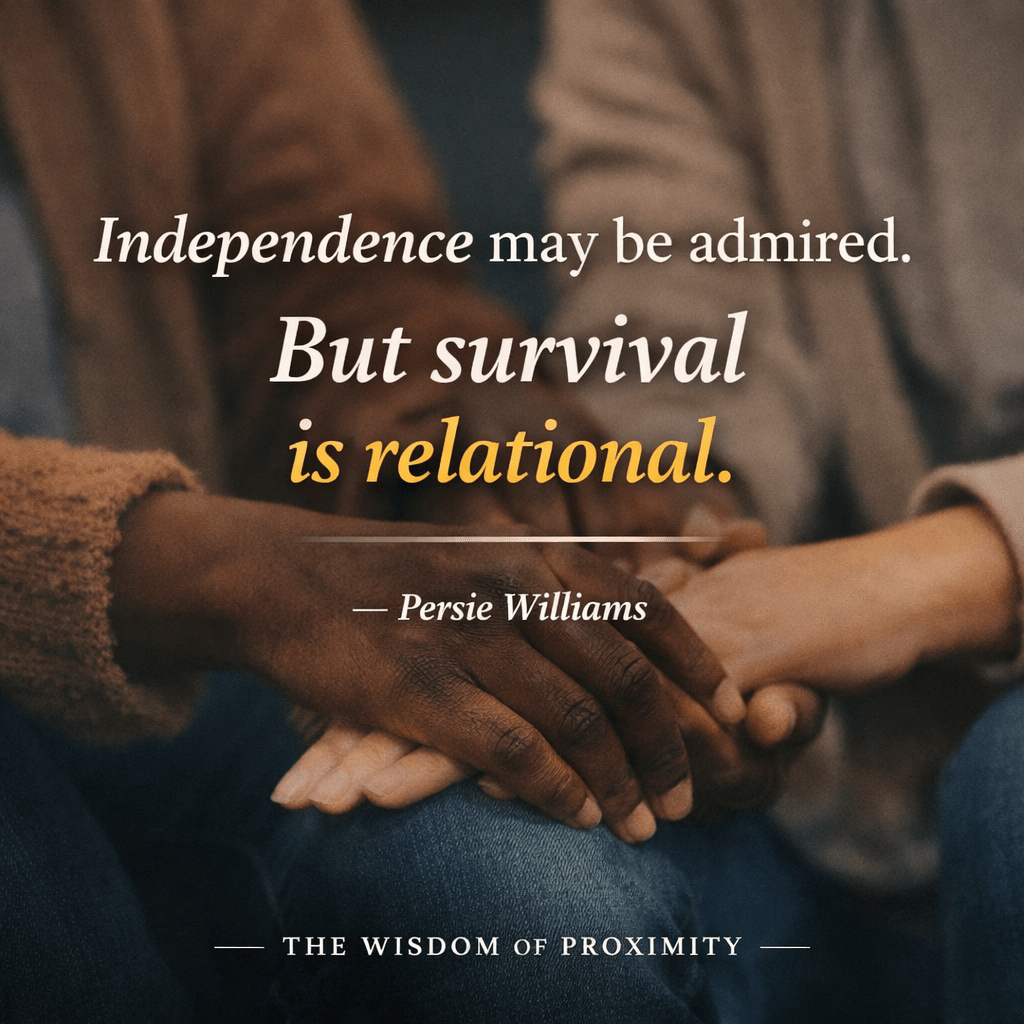
One of the things migration teaches you, sometimes gently, sometimes painfully, is that survival is rarely an individual achievement.
It is relational. Yes, you read that right.
In simple terms, survival is largely a function of your ability to build and sustain quality relationships.
There is a quiet piece of wisdom buried in Scripture that many immigrants eventually discover through lived experience.
“Do not forsake your friend or a friend of your family, and do not go to your relative’s house when disaster strikes you—better a neighbor nearby than a relative far away.”
— Proverbs 27:10
At first glance, that verse almost sounds offensive. Why would Scripture suggest not running to family in times of trouble? Afterall, like people are quick to suggest, “that’s what family is for” .
The point isn’t that family doesn’t matter. The point is far more practical than that.
Proximity matters.
Relationships intentionally built in the present often become more valuable in times of crisis than relationships that exist only through bloodline.
Migration makes this truth unavoidable.
When you move to a new country, the people who share your DNA are suddenly thousands of miles away, living in a different time zone, a different economy, and often a completely different reality.
When trouble comes, your sibling or cousin in another continent may care deeply. But care and presence are not the same thing. This drives home the subtle phenomenon regarding “location advantage” :)
What the proverb is quietly teaching is something simple but profound: “community must be built before crisis arrives.” This takes a lot of proactivity and intentionality.
You do not build relationships during emergencies. You draw from them.
And immigrants tend to understand this instinctively, even when they may not have the language to explain it. This is why churches, cultural associations, prayer groups, and tight ethnic communities often become magnets for newcomers.
It is not always theology that draws people to these places. Often, it is survival.
- Belonging becomes infrastructure.
- Community becomes insurance.
- Relationships become the difference between resilience and collapse.
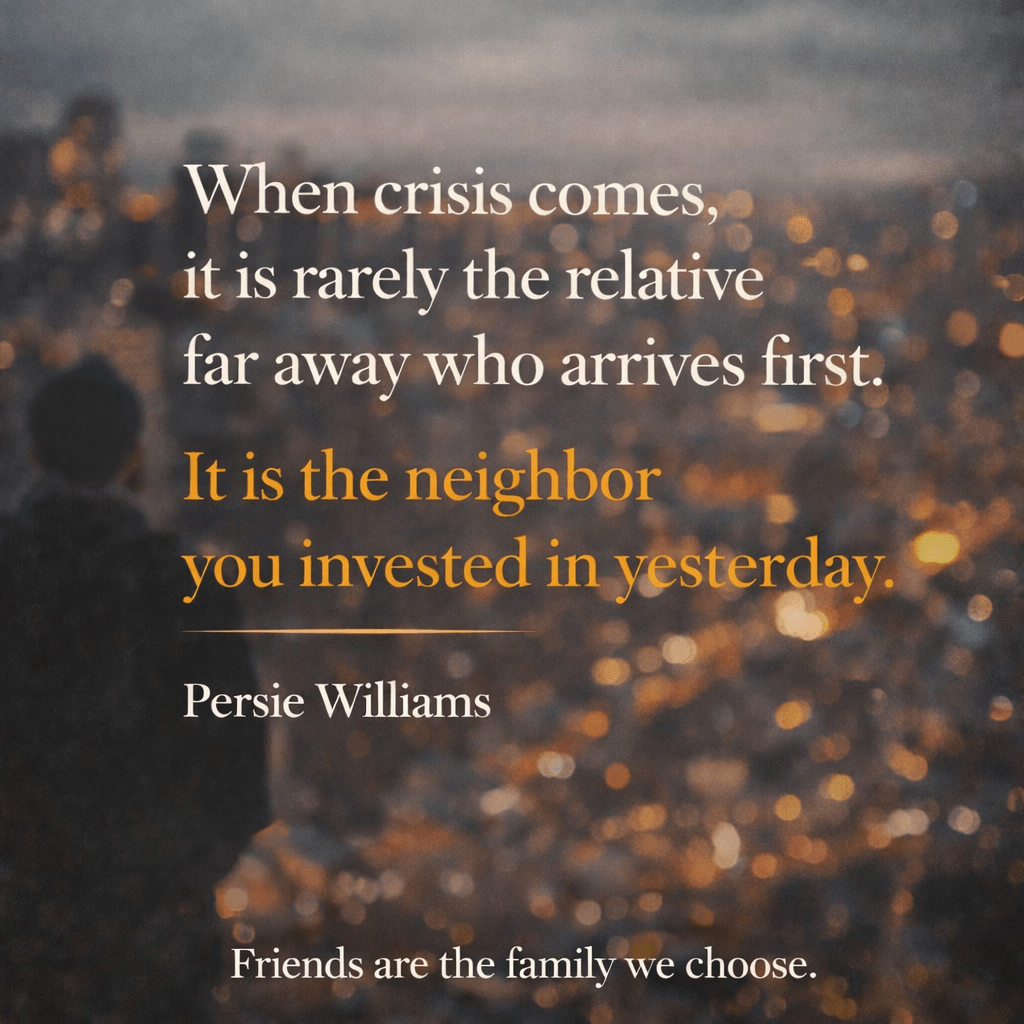
When crisis comes, it is rarely the relative far away who arrives first.
It is the neighbor you invested in yesterday.
This perhaps is why one of the most enduring truths about community is also one of the simplest:
Friends are the family we choose.
This truth is valid not because blood is unimportant, but because sometimes the people who walk beside us in the present become far more central to our survival than the people who simply share our past / blood / DNA.

As adults, we have to be intentional about building meaningful relationships.
Friendships and relationships rarely grow accidentally. They require time, presence, vulnerability, and care. Left unattended, even the strongest connections fade. But cultivated well, they become the networks that sustain us when life becomes difficult.
Perhaps that is one of the quiet responsibilities of maturity: to build the relationships today that may one day help carry us through tomorrow.
God help us all.

Please shAIR Your Thoughts :-)