On Churchianity and Christianity
There is a quiet prayer I keep returning to: one that feels less like intercession and more like confession:
“When our prodigals return, may they meet the Father before they meet the older brother.“
It sounds generous on the surface. Pastoral. Kind. But it is also unsettling, because it assumes something uncomfortable: that the older brother is often waiting at the door.
The story of the prodigal son is usually told as a redemption arc for the one who left. We rehearse the rebellion, the waste, the hunger, the long walk home. We celebrate the Father’s mercy, the running embrace, the robe, the ring, the feast.
But the older brother lingers at the edge of the story like an unfinished sentence.
He did everything right. He stayed. He worked. He obeyed. And yet, when grace disrupted the order he had built his identity around, he could not rejoice. The Father’s generosity felt like an offense. Mercy felt quite unfair, actually, very unfair.
The older brother is not cruel. He is in fact correct. And that is what makes him dangerous.
Because correctness, when left unchecked, often becomes a gatekeeper. It decides who deserves warmth and who must first endure cold explanations. It polices tone, timing, and posture. It asks returning prodigals to account for themselves before they are allowed to rest.
Many prodigals don’t fail to return because they doubt the Father. They hesitate because they remember the brother. (A friend loves at all times, a brother is born for adversity, Bible)
They remember the looks that linger too long. The questions disguised as concern. The spiritual side-eyes. The subtle reminder that grace may be available, but not without commentary.
So this prayer is not really about them. It is about us.
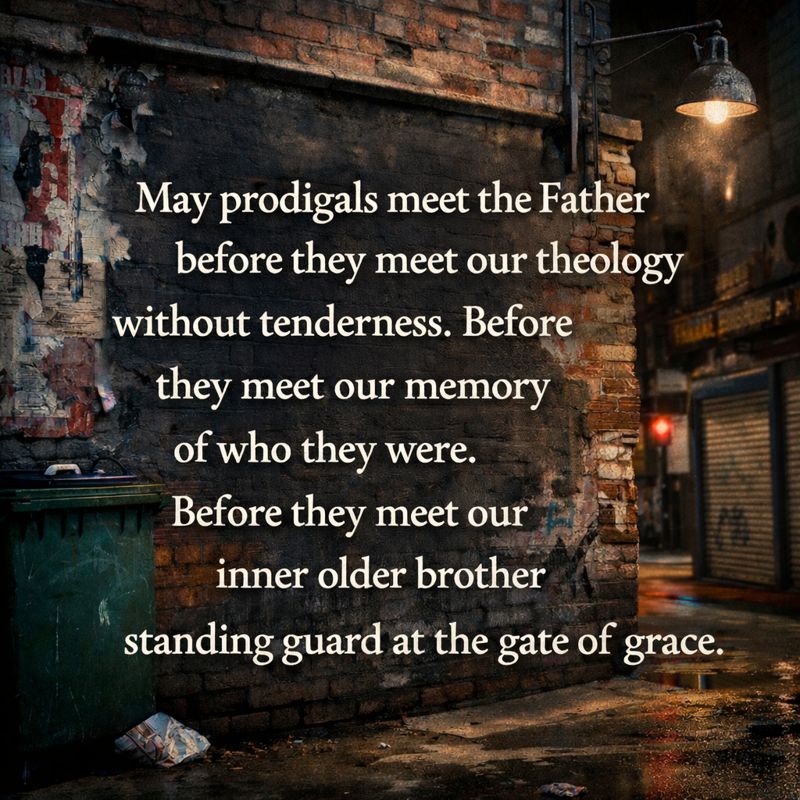
May they meet the Father before they meet the part of us that keeps score. Before they meet our theology without tenderness. Before they meet our memory of who they were at their worst. Before they meet our need to be right.
And if we are honest, many of us who see ourselves as faithful insiders are closer to the older brother than we want to admit.
We know how to stay. We know how to serve. We know how to show up. ( . . .our works? intact)
But we are still learning how to celebrate grace that does not consult us first. (sigh)
The Father, in the story, goes out to both sons. One to welcome home. One to invite in.
The tragedy is not that the older brother is angry. The tragedy is that he might miss the feast altogether.
So perhaps the deeper prayer is this:
When prodigals return, may they meet the Father before they meet us; and may we learn, in time, to sound more like celebration and less like suspicion.
Because grace was never meant to be guarded. It was meant to be given.
Let Us Learn To “Give Grace.” SELAH


Please shAIR Your Thoughts :-)